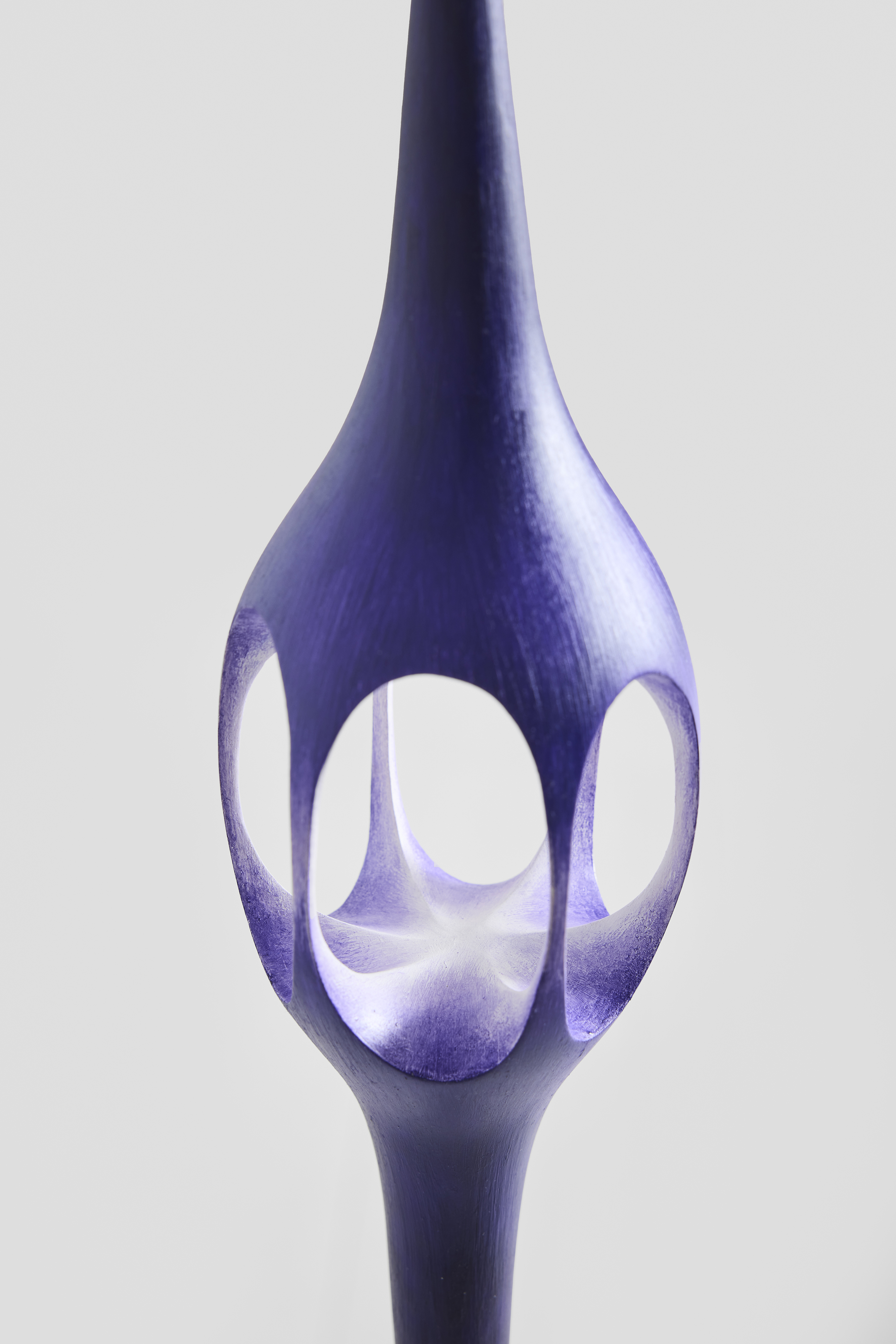
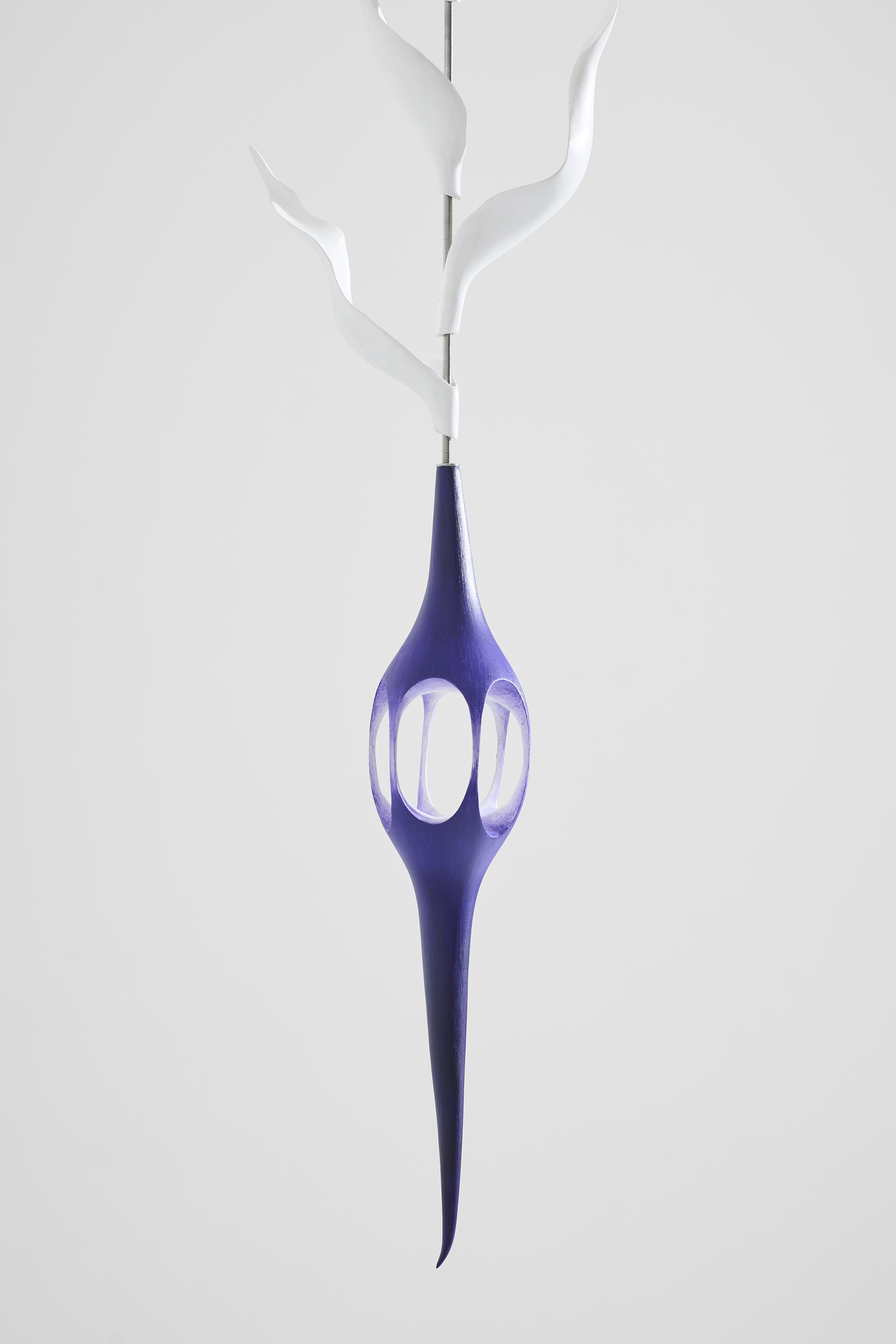
given time, 2026

solid birch, stainless steel

GIVEN TIME is the result of a project in which I was invited to immerse myself in the collections at Rian Design Museum, where I encountered a number of unique flax tools carved from wood. In agrarian society, these objects functioned as courtship gifts, a gesture of love and a way to demonstrate craftsmanship. The courtship gift established the relationship, while the engagement gift confirmed the forthcoming marriage. This became the starting point for my reflections on love and fragility, the gift, and expectation, as well as an interest in practical objects that take on symbolic value, where their function becomes love.

The title GIVEN TIME, borrowed from the French philosopher Jacques Derrida, refers to the relationship between the gift and time, debt, social bonds, and expectation. Derrida questions whether a true gift is even possible - one given without any expectation of return.

A love gift is a deeply personal gesture, yet today most people do not create handcrafted objects. Instead, they buy a box of chocolates or a bouquet of flowers, perhaps ten red roses. This is where my project began to center on the bouquet. In the flax tools, love and craftsmanship were closely intertwined: the greater the skill and time invested in the object, the greater the love and the higher the chance of romance. In the past, crafted objects carried strong emotional value and served as measures of love and suitability as a partner. It was also more common to express one’s deepest feelings through actions and gifts rather than words.

I think many people can recognize the feeling that a handmade gift carries a special emotional value. It is closely tied to the time and care someone has devoted to it. Handmade objects once functioned as codes in courtship; for example, boys would take part in nighttime visits and might leave behind a pocket watch as a token. If it was hanging up and ticking the next time he visited, it signaled that she wanted to see him again. Love languages are individual but rarely unique - we rely on symbols to express love, even as they sometimes wear out into clichés. I wonder how love, relationships, and gift-giving are affected as craft knowledge gradually disappears.

Project management: Konsthantverkscentrum, Form&Folk
Project partners: Borås Museum, Textilmuseet, Bohusläns Museum, Västergötlands Museum, Rörstrand Museum, Rian designmuseum
With support from: Västra Götalandsregionen

Photography: Evelina Björnqvist, Anna Sigge

The fickle shoe rack - concepts around hallway things and their choreographic impact, 2022

solid maple, solid birch, stoneware, glazes, arenga fibre, zipper, textile ribbon 

The installation is based on the idea of the hallways’ act in a home as an intermezzo - a short dramatic, musical, or light characterful performance inserted between the acts of a drama or opera. With a scenographic view and a conceptual approach, I have explored the hallways’ components in correlation with our subconscious routines within that room. The project aims to discover everyday life choreographies with the material world and challenge the hallways’ practical tone. The wooden and ceramic objects are created with a focus on sensory experiences and particularly their sounds, which together play the hallways’ symphony. 

The project was made in collaboration with choreographer and dancer Ida Kjällquist.

given time, 2026

solid birch, stainless steel

GIVEN TIME is the result of a project in which I was invited to immerse myself in the collections at Rian Design Museum, where I encountered a number of unique flax tools carved from wood. In agrarian society, these objects functioned as courtship gifts, a gesture of love and a way to demonstrate craftsmanship. The courtship gift established the relationship, while the engagement gift confirmed the forthcoming marriage. This became the starting point for my reflections on love and fragility, the gift, and expectation, as well as an interest in practical objects that take on symbolic value, where their function becomes love.

The title GIVEN TIME, borrowed from the French philosopher Jacques Derrida, refers to the relationship between the gift and time, debt, social bonds, and expectation. Derrida questions whether a true gift is even possible - one given without any expectation of return.

A love gift is a deeply personal gesture, yet today most people do not create handcrafted objects. Instead, they buy a box of chocolates or a bouquet of flowers, perhaps ten red roses. This is where my project began to center on the bouquet. In the flax tools, love and craftsmanship were closely intertwined: the greater the skill and time invested in the object, the greater the love and the higher the chance of romance. In the past, crafted objects carried strong emotional value and served as measures of love and suitability as a partner. It was also more common to express one’s deepest feelings through actions and gifts rather than words.

I think many people can recognize the feeling that a handmade gift carries a special emotional value. It is closely tied to the time and care someone has devoted to it. Handmade objects once functioned as codes in courtship; for example, boys would take part in nighttime visits and might leave behind a pocket watch as a token. If it was hanging up and ticking the next time he visited, it signaled that she wanted to see him again. Love languages are individual but rarely unique - we rely on symbols to express love, even as they sometimes wear out into clichés. I wonder how love, relationships, and gift-giving are affected as craft knowledge gradually disappears.

Project management: Konsthantverkscentrum, Form&Folk
Project partners: Borås Museum, Textilmuseet, Bohusläns Museum, Västergötlands Museum, Rörstrand Museum, Rian designmuseum
With support from:
Västra Götalandsregionen

Photography: Evelina Björnqvist, Anna Sigge